Home › Healthy Lifestyle & Preventive Care
Healthy Lifestyle & Preventive CareBodyweight Exercises You Can Do Anywhere
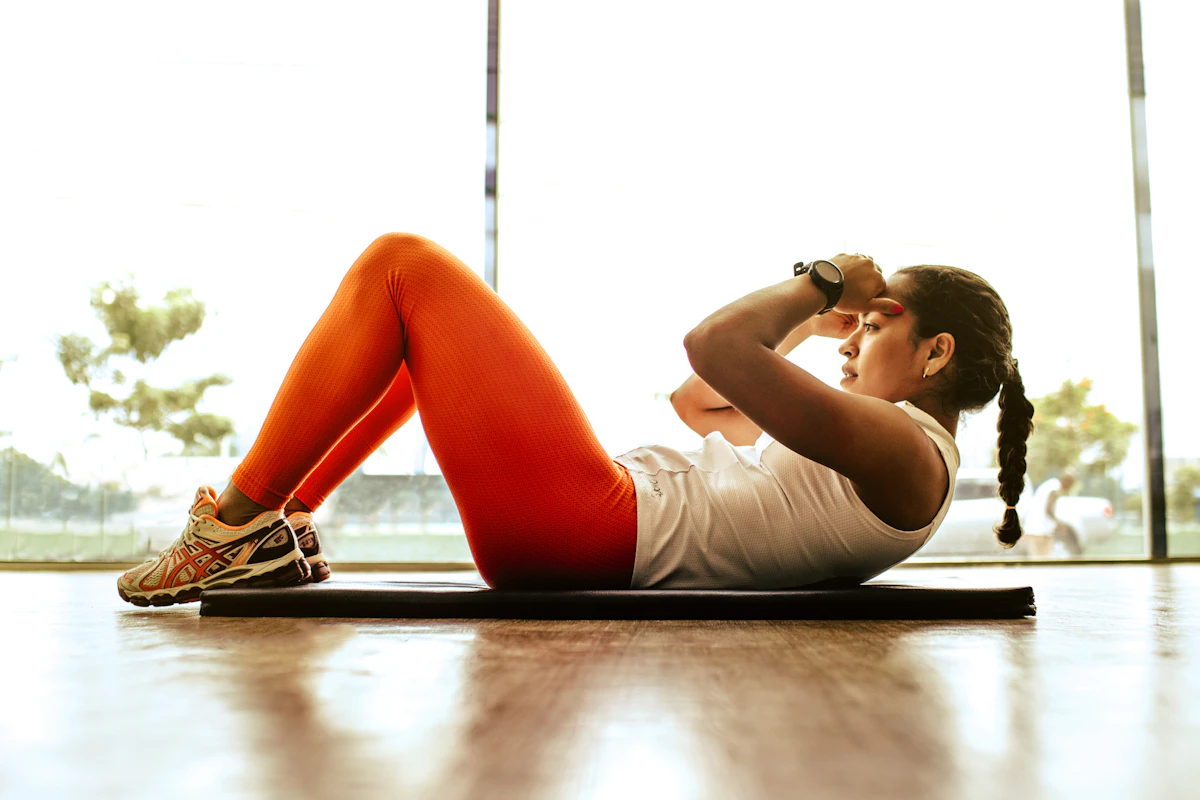
Bodyweight exercises turn almost any space into a place to train. A hallway, a hotel carpet, a park bench or the gap between two meetings is enough room to squat, push, pull and brace your core. There is no membership to pay for and no bag to pack, which removes the most common reasons people skip a workout.
This guide is not another beginner routine. It is a toolbox: twelve movements, each with an easier, a standard and a harder version, plus ways to make them tougher without adding weight, advice for four different settings and three 15-minute circuits you can rotate. Pick the version that feels challenging but controlled today, and move up when it gets easy.
Benefits and Limits of Training With Your Own Weight
Bodyweight exercises are honest and portable. The resistance is always with you, the movements mirror daily life, and most can be scaled by changing your angle, speed or balance. Research on resistance training generally shows that muscles respond to effort rather than to a particular machine, so a well-chosen set taken close to fatigue can build strength in people who are new to exercise.
What it does well
- Accessibility. You can start today with zero cost and zero setup.
- Joint-friendly practice. Controlled movement helps you learn good patterns before you add load.
- Consistency. A routine you can do in a hotel room is a routine you will actually do.
- Balance and coordination. Single-leg and plank variations train stability, not just muscle.
Where it falls short
Your body weight is a fixed load, so you must create progress with leverage, tempo and single-sided work. Pulling is the hardest to train without equipment. If maximum muscle size or heavy strength is your goal, you will eventually want weights or bands. For general health, fitness and energy, however, there is plenty of room to grow before that point.
The Five Movement Categories
Instead of memorizing dozens of exercises, think in patterns. A balanced session touches most of these, and swapping one exercise for another in the same category keeps things fresh without confusing your body.
- Squat: bending knees and hips together. Trains thighs and glutes.
- Hinge: pushing the hips back or driving them up. Trains glutes and hamstrings.
- Push: pressing away from the floor or a surface. Trains chest, shoulders and triceps.
- Pull: drawing your body toward an anchor. Trains the upper back and biceps.
- Brace and carry: resisting movement through the trunk. Trains the abdominals and deep core.
A simple rule is to include at least one lower-body move, one push and one brace in every session, and to add a pull whenever you have a sturdy table or bar available. Cardio-style moves such as step-ups and mountain climbers raise your heart rate on top of that.
Twelve Exercises With Three Levels Each
For each exercise below, start with the easy version if you are unsure. Choose the level where you can complete 8 to 12 smooth reps with two left in reserve. These are the bodyweight exercises worth learning first.
1. Squat variations
Easy: sit down to a chair and stand back up, lightly touching the seat. Standard: a full bodyweight squat with feet shoulder-width apart, chest tall, knees tracking over your toes. Harder: a split squat or a squat with a three-second lowering phase and a pause at the bottom.
2. Push-up progression
Easy: hands on a wall or kitchen counter, body in one line. Standard: hands on the floor, either on knees or toes, elbows about 45 degrees from your ribs. Harder: feet raised on a step, or a slow four-second lowering. The lower your hands sit relative to your feet, the heavier the push-up becomes.
3. Lunges and split squats
Easy: a supported reverse lunge holding a doorframe or chair. Standard: alternating reverse lunges, stepping back far enough that both knees reach about 90 degrees. Harder: a rear-foot-elevated split squat with your back foot on a sofa or low bench.
4. Glute bridge and hip thrust
Easy: a two-leg bridge with a one-second squeeze at the top. Standard: a bridge with a three-second hold, or a hip thrust with your upper back resting on a sofa. Harder: a single-leg bridge or single-leg hip thrust, keeping your pelvis level.
5. Inverted row
This is your main pulling option. Under a sturdy table, lie on your back, grip the edge and pull your chest toward it, keeping your body straight. Easy: bend your knees and keep your feet close. Standard: straight legs, heels on the floor. Harder: raise your feet on a book stack or pause for two seconds at the top. A towel looped around a solid door handle, with the door securely closed, works as an alternative. Always test any anchor with a gentle tug first, and never use a flimsy or glass-topped table.
6. Plank variations
Easy: an incline plank with hands on a counter. Standard: a forearm plank on the floor, ribs down and glutes tight. Harder: a long-lever plank with forearms placed further forward, or alternating shoulder taps without rocking your hips. Stop the set when your lower back sags.
7. Wall sit
Slide down a wall until your thighs are roughly parallel to the floor, shins vertical, back flat. Easy: sit higher, with knees at about 120 degrees. Standard: thighs parallel for 30 to 45 seconds. Harder: lift one foot off the floor for a few seconds each side. Breathe normally throughout.
8. Calf raises
Easy: two-leg raises holding a wall. Standard: two-leg raises with a slow lowering phase. Harder: single-leg raises off the edge of a stair, letting your heel drop slightly below the step before rising high onto your toes. Strong calves support your ankles and Achilles tendons.
9. Step-ups
A bottom stair, a park bench or a sturdy low step is perfect. Easy: a low step with a hand on the rail. Standard: a knee-height step, pressing through the whole foot of the leading leg rather than pushing off the back one. Harder: add a slow three-second lowering, or finish each rep with a knee drive. Keep the working foot fully on the step.
10. Mountain climbers
Easy: hands on a counter or bench, slow alternating knee drives. Standard: hands on the floor in a plank, driving knees toward your chest at a steady pace. Harder: a faster tempo, or cross-body knee drives. They raise your heart rate without jumping, which is helpful in an apartment with neighbors below.
11. Chair dips
Sit on the edge of a stable chair or bench, place your hands beside your hips, slide forward and lower by bending your elbows. Easy: keep your knees bent and feet close, doing a short range of motion. Standard: legs extended with heels down. Harder: elevate your feet on a second chair. Keep your shoulders away from your ears and stop if the front of your shoulder feels pinched; push-ups are a fine substitute.
12. Burpee-free conditioning
Burpees are tiring and hard on wrists and backs, so try alternatives. Easy: a squat-to-reach, standing tall with your arms overhead. Standard: a squat thrust to a high plank and back, stepping rather than jumping. Harder: add a push-up in the plank. You get the full-body effort with far less impact.
How to Make Moves Harder Without Weights
When twelve reps feel easy, resist the urge to chase twenty-five. Use these levers instead. They keep the workout short and the movement precise.
Slow the tempo
Take three to four seconds to lower yourself. The muscle works longer under tension, and any wobble is exposed. A slow squat of eight reps can feel harder than fifteen quick ones.
Add pauses
Stop for two seconds at the hardest point: the bottom of a squat, the lowest point of a push-up or the top of a row. Pauses remove momentum and force the muscles to do the work.
Go one side at a time
Unilateral work, such as single-leg bridges, split squats and single-leg calf raises, doubles the load on one limb and challenges balance. Always start with the weaker side and match the reps on the stronger side.
Change the leverage
Where your hands and feet sit changes the load. Elevating your feet in a push-up, lengthening a plank or lowering your body under a table in a row all shift more weight onto working muscles. Moving a body part further from the center of your body is the simplest way to make an exercise tougher.
Where to Train: Four Common Settings
A small apartment
Floor space the size of a yoga mat is enough. Favor quiet, low-impact moves: slow squats, bridges, push-ups, planks and step-through lunges. Skip jumping if you have downstairs neighbors.
An office break
Five or ten minutes counts. Use a sturdy desk for incline push-ups, sit-to-stand squats from your chair, calf raises while you wait for a printer and wall sits next to a quiet corridor. Keep the effort moderate if you cannot change clothes or wash. Our guide to desk health and posture adds simple tips for the rest of your workday.
A hotel room
Clear a strip beside the bed. Use the bed edge or desk for incline push-ups and dips, a sturdy desk for inverted rows only if it is stable and heavy, the bathroom wall for wall sits and the corridor for walking lunges. A pair of socks on a smooth floor can be too slippery, so wear shoes for standing moves.
A park
Parks offer the best equipment: benches for step-ups, incline push-ups and dips, low walls for split squats and open grass for lunges. Check any bench or bar for stability before putting your weight on it, and avoid wet surfaces.
Three 15-Minute Sample Circuits
Each circuit uses a simple format: work for 40 seconds, rest 20 seconds, move to the next exercise, and complete the full list three times. Pick the level that lets you keep good form. Warm up for two minutes first.
| Circuit | Best for | Exercises (in order) | Rounds |
|---|---|---|---|
| A: Quiet strength | Apartment or hotel | Squat, incline push-up, glute bridge, forearm plank, calf raise | 3 |
| B: Park builder | Outdoors | Step-up, bench push-up, split squat, bench dip, mountain climber | 3 |
| C: Pull and core | Home with a sturdy table | Inverted row, wall sit, single-leg bridge, plank shoulder tap, squat thrust | 3 |
Rotate the circuits across the week. For example, do A on Monday, B on Wednesday and C on Friday, with walking or stretching on other days. If you want to build a longer plan, read our guide to a weekly workout routine.
Example: A Traveling Worker
Daniel is a sales consultant who spends three nights a week in hotels. In the past, he promised himself he would find a gym, then ate late and skipped it. Now he follows a travel rule: fifteen minutes before the first shower, no exceptions, using whatever the room offers.
On arrival day, he does Circuit A beside the bed with a bath towel under his knees and forearms. The next morning he does a shorter version, two rounds, while the coffee brews. On the plane and in airports he walks between gates rather than sitting, and he does ten slow calf raises while he waits to board. At home, he uses the local park for Circuit B on Saturday.
His results are modest and realistic: he skips fewer sessions, sleeps a little better and says his back feels less stiff after long flights. He needed a plan that fit his worst week, not his best one.
Common Mistakes
- Chasing reps instead of quality. Fast, shallow reps train momentum, not muscle. Slow down.
- Skipping pulling work. Doing only pushes can leave your shoulders rounded forward. Add rows or backward-reaching moves when you can.
- Letting the lower back sag. In planks and push-ups, squeeze your glutes and tighten your stomach.
- Knees collapsing inward. Press your knees gently out in squats, lunges and step-ups.
- Using unstable furniture. Chairs on rugs, wheeled office chairs and wobbly tables are accidents waiting to happen.
- Never progressing. If every set feels easy, change the tempo or leverage.
- Doing it all hard, every day. Leave at least one easy day between hard sessions for the same muscles.
- Ignoring mobility. Stretching tight hips and shoulders helps you move well; see our stretching routine for flexibility.
Safety and When to See a Doctor
Choose the easy version of any exercise that causes pain instead of effort. A muscle burning or shaking is normal; sharp, pinching or joint pain is not. Wrists, shoulders and knees deserve extra care in push-ups, dips and lunges, so adjust the angle or range of motion before they complain.
Stop and seek medical advice if you notice chest discomfort, dizziness, fainting, unusual shortness of breath, numbness, tingling or sudden pain. Warm up for a few minutes and avoid training on slippery floors or unstable surfaces.
Please note: This article is general education, not personal medical advice. If you have a heart condition, high blood pressure, joint or back problems, an injury, are pregnant or have been inactive for a long time, speak with a doctor or qualified professional before starting a new program.
Frequently Asked Questions
Can I build muscle with only my body weight?
Yes, especially if you are new to training. Muscles respond to challenging effort, so progress the leverage, tempo and single-sided work. Experienced exercisers may eventually need added resistance to keep progressing.
How often should I train?
Two to four sessions per week suits most people. Allow a rest day between hard sessions for the same muscles, and fill other days with walking or gentle stretching.
How many reps and sets should I do?
Aim for two to three sets of 8 to 12 reps, or 20 to 40 seconds for holds, finishing with a couple of reps in reserve. When you can do 12 smooth reps on every set, move to a harder version.
Are these exercises suitable for older adults?
Many are, using the easy versions with a wall, counter or sturdy chair for support. Balance and leg strength matter more with age, but check with a healthcare professional first if you have health concerns.
Can bodyweight training replace cardio?
Circuits with step-ups and mountain climbers raise your heart rate, but steady walking, cycling or swimming adds more variety. See our guide to the best cardio workouts to combine the two.