Home › Healthy Lifestyle & Preventive Care
Healthy Lifestyle & Preventive CareStrength Training Basics: How to Build Muscle Safely
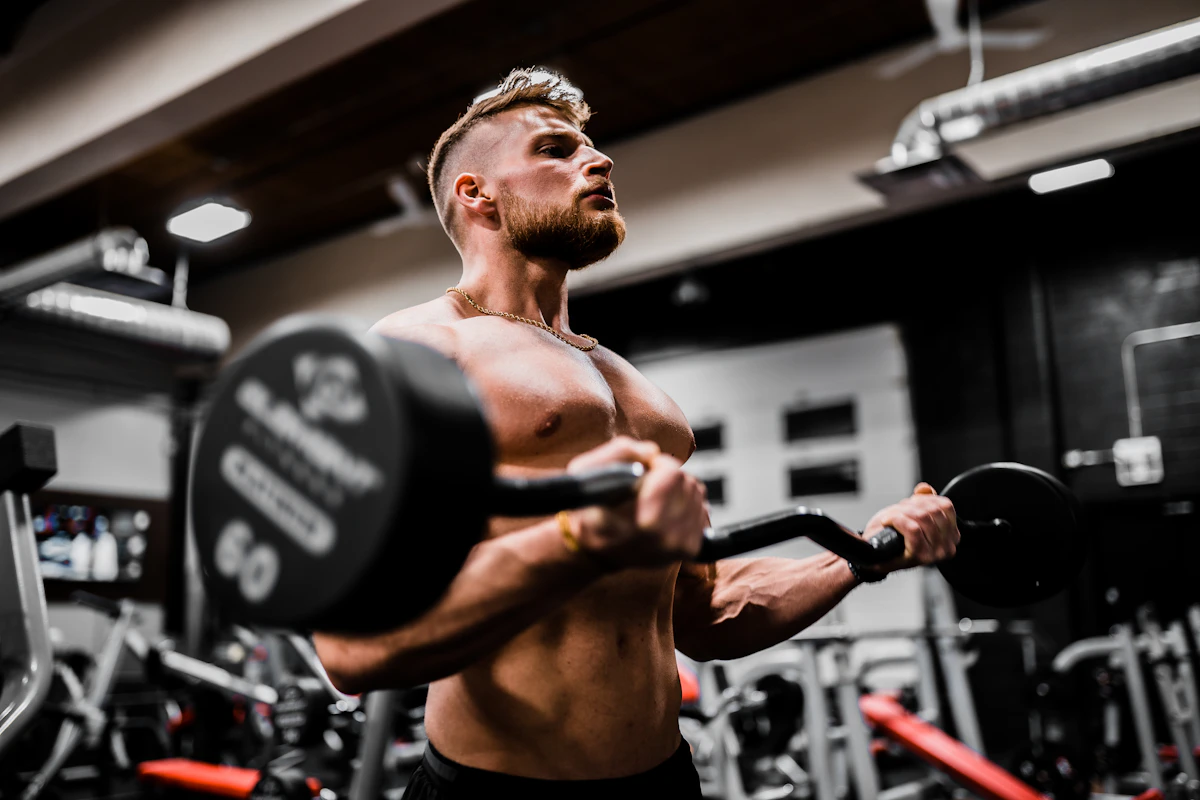
Strength training for beginners is simpler than the gym culture around it suggests. You lift, push, pull or carry something that feels challenging, rest, and then do it again a little better. Over weeks, your muscles, bones and nervous system adapt, and ordinary tasks such as lifting a suitcase, climbing stairs or playing with children start to feel easier.
This guide explains how strength training works in plain language. You will learn the five basic movement patterns, how many sets and reps to use, how to choose a weight, how to apply progressive overload, and what good technique looks like on four key lifts. You will also find two sample plans, a realistic first eight weeks, recovery basics and answers to common questions. Whether you train at home or in a gym, the principles of strength training for beginners stay the same.
What Strength Training Does for Your Body
Strength training, also called resistance training, means working your muscles against a load. The load can be a dumbbell, a resistance band, a machine or your own body weight. The body responds to this stress by becoming better at handling it, and the benefits reach well beyond the mirror.
Muscle
Regular training increases muscle strength and, over time, muscle size. Early strength gains in beginners come mostly from the nervous system learning to recruit muscle fibers more efficiently, which is why you often feel stronger within a few weeks even before anything looks different.
Bones and joints
Bone responds to load. Weight-bearing and resistance exercise helps maintain bone density, which matters more as we age. Strong muscles also support the joints around them, which can make daily movement feel more stable.
Metabolism and health markers
Muscle is metabolically active tissue, so keeping or building it supports a healthy metabolism. Research also links regular resistance training with better blood sugar control, healthier blood pressure and improved mood and sleep for many people. These are general associations, and results vary from person to person.
Daily function
This may be the most valuable benefit. Standing up from a low chair, carrying groceries, lifting a child or moving a box are all strength tasks. Training them on purpose, in a controlled way, makes real life easier and helps you stay independent for longer.
The Five Basic Movement Patterns
Instead of memorizing dozens of exercises, learn five patterns. Almost every good beginner routine is built from them, and each pattern has easy and harder versions.
1. Squat
Bending the knees and hips to lower your body, then standing. It trains the thighs, glutes and trunk. Beginner options: sit-to-stand from a chair, bodyweight squat, goblet squat holding one dumbbell at your chest.
2. Hinge
Pushing the hips back while the spine stays neutral, as if closing a car door with your backside. It trains the hamstrings, glutes and lower back. Beginner options: glute bridge, hip hinge with a broomstick, Romanian deadlift with light dumbbells, kettlebell deadlift.
3. Push
Moving a load away from your body or overhead. It trains the chest, shoulders and triceps. Beginner options: wall or incline push-up, knee push-up, dumbbell floor press, light overhead press.
4. Pull
Bringing a load toward your body. It trains the upper back, rear shoulders and biceps, and balances all the pushing and desk-leaning of modern life. Beginner options: resistance band row, one-arm dumbbell row, seated cable row, lat pulldown.
5. Carry
Walking while holding weight. It trains grip, core and posture all at once. Beginner options: suitcase carry with one dumbbell, farmer carry with two, or simply carrying full shopping bags with attention to standing tall.
If your session includes one exercise from each pattern, you have trained your whole body. If you want a ready-made routine without equipment, our beginner full-body workout at home uses these same ideas.
Sets, Reps and Rep Ranges
A rep is one complete movement, and a set is a group of reps performed back to back. The number of reps you choose nudges the training toward different goals, although the ranges overlap more than most people think.
- Heavier, lower reps (3 to 6): emphasizes maximal strength. It needs good technique and is usually better after a few months of practice.
- Moderate reps (6 to 12): a versatile range for building both strength and muscle size. This is where most beginners should spend their time.
- Lighter, higher reps (12 to 20): useful for learning technique, building endurance and training muscle size when sets are taken close to fatigue.
Evidence suggests muscle can grow across a wide range of loads as long as the set is challenging enough. For a beginner, a practical starting point is two to three sets of 8 to 12 reps per exercise, resting 60 to 120 seconds between sets. Rest longer on heavier lifts such as squats and deadlifts, and shorter on lighter exercises such as band rows.
Progressive Overload Made Simple
Progressive overload means gradually asking your body to do slightly more over time. Without it, the body has no reason to adapt. With it, steady progress becomes almost automatic. Overload does not only mean adding weight. There are several levers you can pull:
- Add reps. Goblet squat with 10 kg: week one 8 reps, week two 9, week three 10.
- Add sets. Move from two sets to three of the same exercise.
- Add weight. Once you reach the top of your rep range, increase the load by the smallest step available and drop back to the bottom of the range.
- Slow the tempo. Take three seconds to lower the weight instead of one.
A worked example
Priya starts with a dumbbell row at 8 kg for 3 sets of 8 reps. Next week she gets 9, 8 and 8. The week after, she gets 10, 9 and 9. Once she manages 3 sets of 12 with good form, she moves to 10 kg and returns to 3 sets of 8. This "double progression" method, adding reps first and weight second, is one of the simplest and safest systems for beginners.
Choosing a Weight and Using Reps in Reserve
Guessing a starting weight is the part that worries beginners most. The most useful tool is reps in reserve, often shortened to RIR. It describes how many good-quality reps you could still have done when you stop the set.
- 0 RIR: you could not do another rep. This is failure, and it is not needed for beginners.
- 1 RIR: you could have done one more rep.
- 2 RIR: you could have done two more. This is the sweet spot for most working sets.
- 3 or more RIR: the set felt easy. Fine for warm-ups, too light for a working set.
How to find your starting weight
Pick a light weight and perform 8 to 10 reps. If it felt like you had five or more reps left, increase the weight and try again. When the last two reps are slow and demanding but your form stays clean, you have found a working weight. For your first two weeks, aim for 3 RIR and move toward 2 RIR as your technique improves. Stopping well short of failure is not laziness; it lets you recover and train again two days later.
Technique Cues for Four Key Lifts
These cues are starting points. Filming a set from the side and from the front is a helpful way to check what you actually do.
Squat
- Feet about shoulder-width apart, toes turned out slightly.
- Take a breath into your stomach and brace as if expecting a light tap.
- Sit down and slightly back, letting knees track over your toes.
- Keep your whole foot on the floor and stand by pushing the floor away.
Deadlift pattern (hinge)
- Stand with the weight over the middle of your feet.
- Push your hips back first, with a soft bend in the knees.
- Keep your back long and the weight close to your legs.
- Grip the weight, tighten your upper back and stand by driving your hips forward.
- Finish tall without leaning back. Lower with the same hip-first movement.
Row
- Hinge forward with a flat back, or support one hand and knee on a bench.
- Start with arms long and shoulder blades relaxed forward.
- Pull your elbow toward your hip rather than lifting the hand toward your chest.
- Pause briefly, squeeze the shoulder blade back, then lower slowly.
Overhead press
- Stand with feet hip-width apart, squeeze your glutes and brace your stomach.
- Start with the weights at shoulder height, forearms vertical.
- Press straight up, moving your head slightly forward once the weights pass it.
- Finish with biceps near your ears and ribs down, not an arched lower back.
Tip: Begin each exercise with a warm-up set at about half your working weight for 6 to 8 reps. It rehearses the movement and prepares your joints, and it takes under two minutes.
Two Sample Plans: 2 Days and 3 Days
Both plans use the same full-body structure. Start with two sets per exercise for the first two weeks, then move to three if you recover well. Rest at least one day between sessions.
| Pattern | 2-day plan (Mon, Thu) | 3-day plan (Mon, Wed, Fri) | Reps |
|---|---|---|---|
| Squat | Goblet squat (both days) | Goblet squat (Mon, Fri), split squat (Wed) | 8 to 12 |
| Hinge | Romanian deadlift (both days) | Romanian deadlift (Mon), glute bridge (Wed), kettlebell deadlift (Fri) | 8 to 12 |
| Push | Push-up variation (Mon), overhead press (Thu) | Push-up (Mon), overhead press (Wed), floor press (Fri) | 8 to 12 |
| Pull | Dumbbell row (both days) | Row (Mon), band pulldown (Wed), row (Fri) | 8 to 12 |
| Carry | Suitcase carry, 2 x 30 seconds | Farmer carry, 2 x 30 seconds | Time |
A typical session takes 40 to 50 minutes including a five-minute warm-up, which makes this style of strength training for beginners realistic for a busy week. If you want to expand to a gym-based routine later, see our gym workout plan for beginners.
Recovery, Sleep and Protein Basics
You do not get stronger during the workout; you get stronger as your body recovers and adapts afterward. Three simple habits matter most.
Sleep
Most adults do best with seven to nine hours. Poor sleep can make training feel harder and recovery slower.
Protein
Protein supplies the building blocks for muscle repair. General guidance for people who exercise regularly is often around 1.2 to 1.6 grams per kilogram of body weight per day, spread across meals, though needs differ. People with kidney conditions or special dietary needs should check with a healthcare professional first. Our protein guide explains daily needs in more detail.
Your First 8 Weeks, Step by Step
Consider Daniel, 34, who works at a desk and has never trained. He chooses the 3-day plan, using dumbbells at home.
- Weeks 1 and 2: learn the movements. Two sets of 10 reps at 3 RIR. He films his squat and row, and mostly focuses on feeling the correct muscles work.
- Weeks 3 and 4: add volume. A third set on the main lifts, still 3 to 2 RIR. Soreness fades as his body adapts.
- Week 5: add load. He reaches 12 reps on his goblet squat and increases the dumbbell by one step, dropping back to 8 reps.
- Weeks 6 and 7: build. He works toward 2 RIR, adds a slow three-second lowering phase and keeps a written log.
- Week 8: consolidate. He reduces sets by about one third, rests well and repeats his week-one tests. He can now do more reps with heavier weights and feels steadier on stairs.
Notice what Daniel does not do: he does not train to failure, rush weight increases or skip rest days. After week eight, he reviews his log and chooses the next block. If you want to pair lifting with other activity, a weekly workout routine shows how to balance the week.
Common Mistakes to Avoid
- Ego lifting. Loading more than you can control leads to sloppy form and injuries.
- Skipping the warm-up. Five minutes of easy movement and a lighter first set make everything smoother.
- No progression. Using the same weights and reps for months stops progress. Track your sessions and aim to beat last time slightly.
- Changing the program every week. You need repetition to learn a lift. Stay with a plan for at least four to eight weeks.
- Training through sharp pain. Muscle fatigue is expected, sharp or joint pain is a stop signal.
Safety and When to See a Doctor
Strength training is generally safe for most people when it is introduced gradually and performed with control. Mild muscle soreness for a day or two after new exercises is normal. Stop and seek medical advice if you notice chest pain, dizziness, fainting, unusual breathlessness, numbness, tingling or sharp, sudden or persistent joint pain.
Please note: This article is general education, not personal medical advice. If you have a heart condition, high blood pressure, osteoporosis, joint problems, an injury, are pregnant or have not exercised for a long time, speak with a doctor or qualified professional before starting a new program.
Frequently Asked Questions
How many days a week should a beginner lift?
Two or three full-body sessions per week is enough for most beginners. Leave at least one rest day between sessions, so muscles have time to recover.
Will lifting weights make women bulky?
Not by accident. Building large muscles takes years of dedicated training and eating, and most women gain firmer, stronger muscle with a noticeable improvement in everyday function instead of bulk.
Do I need a gym?
No. Dumbbells, bands and bodyweight moves can cover all five patterns at home. A gym adds variety and heavier options later. Our guide to bodyweight exercises anywhere is a good starting point.
How long until I see results?
Many beginners notice better strength and energy within three to four weeks, while visible changes in muscle often take eight to twelve weeks or longer. Progress varies with sleep, nutrition, age and consistency.
Should I do cardio as well?
Yes, a mix is best for overall health. Walking, cycling or swimming on non-lifting days complements your training without taking much recovery away.
Is soreness a sign of a good workout?
Not necessarily. Soreness is common when you try something new, but you can make excellent progress with little of it.